

Inflatable Pipe Plugs vs Water-Blocking Airbags: What Is the Difference?
Inflatable pipe plugs and water-blocking airbags are both flexible pipeline sealing devices used to temporarily block pipes during maintenance, inspection, repair, testing, and construction. Because the two products often look similar and operate on the same inflation principle, buyers frequently ask an important question: what is the difference between inflatable pipe plugs and water-blocking airbags?
In many projects, the two terms can overlap. A water-blocking airbag is essentially a type of Inflatable Pipeline Plug designed primarily for temporary water, wastewater, sewage, or drainage isolation. The term inflatable pipe plug is broader and can describe a wider range of inflatable sealing devices used for sewer lines, drainage pipes, pipeline testing, bypass operations, maintenance, and temporary flow control.
The actual difference therefore depends less on the product name and more on the intended application, pressure rating, pipe diameter range, sealing length, rubber construction, reinforcement, restraint requirements, and operating environment.
For municipal contractors, wastewater maintenance teams, drainage companies, pipeline testing contractors, and civil engineering buyers, understanding these differences is important. Selecting the wrong inflatable pipe plug or water-blocking airbag can lead to leakage, slippage, puncture, insufficient sealing, or failure under back pressure.
This guide compares inflatable pipe plugs vs water-blocking airbags in terms of working principle, applications, design, size range, pressure, materials, installation, safety, maintenance, and selection.
An inflatable pipe plug is a flexible sealing device inserted into a pipeline and expanded with compressed air until it presses against the internal pipe wall.
Inflatable pipe plugs may be used to:
Stop or reduce pipeline flow
Isolate a pipeline section
Support maintenance
Perform leakage testing
Assist sewer repair
Temporarily block drainage pipes
Support pipeline inspection
Create controlled test sections
The term inflatable pipe plug is relatively broad.
Depending on the application, an inflatable pipe plug may also be described as:
Inflatable sewer plug
Pipeline plug
Pipe test plug
Inflatable pipeline stopper
Rubber pipe plug
Sewer blocking plug
Drainage pipe plug
An inflatable pipe plug usually contains reinforced rubber layers, an inflation valve, and connection points for restraint or retrieval.
A water-blocking airbag is also an inflatable sealing device used inside pipelines.
Its primary purpose is usually to temporarily stop water, wastewater, sewage, or drainage flow.
Water-blocking airbags are commonly used for:
Municipal sewer maintenance
Drainage pipe repair
Closed-water testing
Wastewater pipelines
Water conservancy projects
Temporary pipeline isolation
The term water-blocking airbag is often used where the main function is specifically water sealing.
A water-blocking airbag may also be called:
Pipeline sealing airbag
Water-stop airbag
Pipeline plugging airbag
Inflatable water plug
In practice, many water-blocking airbags operate in the same way as inflatable pipe plugs.
The most important point is that these are not always two completely separate product categories.
A water-blocking airbag can be considered a specialized type of inflatable pipe plug.
The difference is mainly in:
Application focus
Pressure rating
Diameter range
Construction
Sealing length
Intended pipeline environment
An inflatable pipe plug may be designed for a broader range of temporary pipeline sealing applications.
A water-blocking airbag is generally marketed specifically for water isolation, sewer blocking, drainage maintenance, and water-tightness testing.
Therefore, buyers should compare technical specifications rather than relying only on the product name.
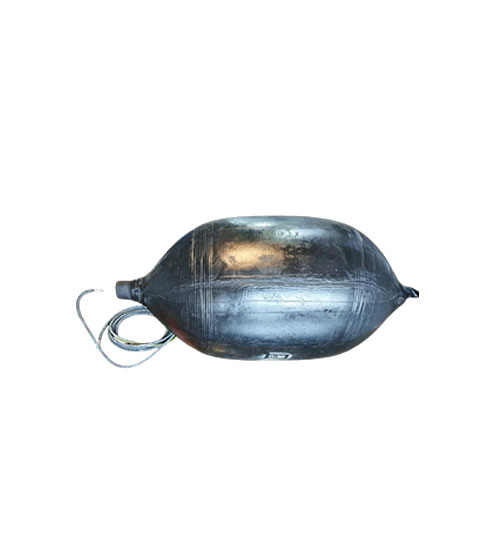
| Factor | Inflatable Pipe Plug | Water-Blocking Airbag |
|---|---|---|
| Main category | Broad pipeline sealing device | Water-focused inflatable sealing device |
| Main applications | Testing, sealing, maintenance, flow isolation | Water blocking, sewer sealing, drainage isolation |
| Pipe types | Sewer, drainage, industrial, utility pipelines | Sewer, drainage, water and wastewater pipelines |
| Construction | Reinforced rubber | Reinforced rubber |
| Inflation method | Compressed air | Compressed air |
| Reusability | Usually reusable | Usually reusable |
| Pressure range | Depends on design | Depends on design |
| Diameter range | Specific or multi-size | Specific or multi-size |
| Restraint needed | Frequently required | Frequently required |
This table shows that the technical overlap is significant.
An inflatable pipe plug is inserted into the pipeline while deflated.
Once positioned, compressed air is introduced.
The plug expands outward and presses against the internal pipe wall.
This creates:
Contact pressure
Friction
Temporary sealing
The basic process includes:
Inspect the pipe.
Clean the sealing area.
Inspect the inflatable pipe plug.
Insert the plug while deflated.
Position it correctly.
Secure the plug.
Inflate gradually.
Confirm inflation pressure.
Introduce pipeline pressure.
Perform maintenance or testing.
Relieve back pressure.
Deflate and remove.
A water-blocking airbag uses the same basic operating principle.
The airbag is inserted, inflated, and pressed against the internal pipe wall.
The inflated body temporarily blocks water or wastewater.
The main difference is the intended service.
Water-blocking airbags are commonly used where temporary water isolation is the primary goal.
Inflatable pipe plugs generally have a broader application scope.
They may be used for:
Pipeline pressure testing
Sewer isolation
Drainage sealing
Inspection
Maintenance
Bypass operations
Temporary flow control
Water-blocking airbags are more commonly used for:
Sewer water blocking
Drainage isolation
Closed-water testing
Pipeline repair
Municipal maintenance
Temporary water control
Therefore, application terminology is one of the clearest differences.
Pressure is one of the most important technical differences between products.
Not all inflatable pipe plugs and water-blocking airbags have the same pressure rating.
Important specifications include:
Inflation pressure
Maximum back pressure
Maximum water head
An inflatable pipe plug designed for a demanding testing application may have a different pressure rating from a standard water-blocking airbag used in a gravity sewer.
However, some water-blocking airbags are also manufactured for higher-pressure applications.
The product name alone does not determine pressure capability.
Always compare actual rated values.
Both inflatable pipe plugs and water-blocking airbags can be designed for:
One fixed pipe diameter
A range of pipe diameters
Some inflatable pipe plugs have a relatively broad expansion range.
Some water-blocking airbags may be manufactured to closely match a specific sewer or drainage pipe size.
When comparing products, check:
Minimum pipe diameter
Maximum pipe diameter
Recommended diameter range
A wide diameter range is convenient, but the plug must still provide stable sealing throughout that range.
Sealing length refers to the portion of the inflated plug that contacts the pipe wall.
Longer sealing surfaces can provide greater contact area.
This may help improve:
Friction
Stability
Sealing
Some water-blocking airbags are designed with relatively long cylindrical bodies for drainage and sewer applications.
Inflatable pipe plug designs can vary significantly depending on use.
Inflatable pipe plugs can have different body shapes.
Common forms include:
Cylindrical
Rounded
Short-body
Long-body
Water-blocking airbags are commonly long cylindrical designs because they need stable contact with sewer or drainage pipe walls.
However, product geometry varies by manufacturer and application.
Both products are typically made from reinforced rubber.
A common structure includes:
Inner airtight layer
Reinforcement fabric
Outer wear-resistant layer
The exact rubber compound may differ depending on:
Wastewater exposure
Oils
Chemicals
Abrasion
Temperature
Therefore, buyers should evaluate rubber compatibility rather than assume all inflatable plugs are made from identical materials.
Reinforcement fabric is essential because it controls expansion.
Without reinforcement, a rubber airbag could stretch excessively.
Stronger reinforcement may provide:
Better dimensional control
Greater pressure resistance
Better reusable life
Large inflatable pipe plugs and High-pressure water-blocking airbags generally require more robust reinforcement.
Water-blocking airbags are particularly common in sewer and drainage work.
Typical applications include:
Temporary sewer isolation
Manhole maintenance
Drainage repair
Pipe cleaning
Closed-water testing
Inflatable pipe plugs can perform the same functions, but the broader term also covers additional applications.
Inflatable pipe plugs are commonly associated with pipeline testing.
They may be used to isolate sections during:
Leakage testing
Water testing
Low-pressure testing
Water-blocking airbags may also be used for closed-water testing.
The key factor is whether the product is rated for the required test pressure.
Both inflatable pipe plugs and water-blocking airbags can be pushed along the pipe by upstream pressure.
This creates an axial force.
As pressure increases, the force on the plug can become significant.
Therefore, both products may require:
Safety cables
Mechanical bracing
Structural supports
Approved restraint systems
Neither inflatable pipe plugs nor water-blocking airbags should be assumed to remain safely in place through friction alone under all operating conditions.
Inflatable pipe plugs may be purchased by:
Pipeline testing contractors
Sewer maintenance companies
Industrial maintenance teams
Utility contractors
Water-blocking airbags are especially common among:
Municipal drainage teams
Sewer contractors
Water conservancy contractors
Civil engineering companies
Again, the actual product may be technically very similar.
For sewer maintenance, either product can potentially be suitable.
The important factors are:
Pipe diameter
Pipe material
Wastewater pressure
Access
Required sealing duration
Restraint
If both products meet these requirements, either may perform the required task.
The buyer should compare specifications rather than terminology.
For gravity drainage systems, water-blocking airbags are commonly selected because they are specifically designed for temporary water isolation.
However, an inflatable pipe plug with suitable diameter and pressure ratings can perform the same function.
The better option is the one that matches:
Actual pipe diameter
Water head
Back pressure
Surface condition
Installation access
Both may be suitable.
For closed-water testing, buyers should confirm:
Test water level
Maximum pressure
Test duration
Pipe diameter
Plug stability
A water-blocking airbag is often marketed specifically for this application.
An inflatable pipe test plug may offer equivalent performance if correctly rated.
For sewer or drainage repairs, water-blocking airbags can be highly practical.
They are:
Flexible
Lightweight
Easy to insert
Easy to remove
Inflatable pipe plugs may provide additional options for specialized pressure or diameter requirements.
Always confirm actual internal pipe diameter.
Do not rely only on nominal diameter.
Internal dimensions may be affected by:
Wall thickness
Sediment
Liners
Scale
Deformation
The inflatable pipe plug or water-blocking airbag must operate within its rated diameter range.
Different pipe materials affect sealing.
Common pipe materials include:
Concrete
PVC
HDPE
Steel
Clay
Concrete may be rougher.
PVC and HDPE are smoother.
Smooth surfaces can reduce friction and increase the importance of restraint.
Back pressure is one of the most critical specifications.
The selected plug must withstand the expected upstream pressure.
Do not confuse back pressure with inflation pressure.
The maximum allowable back pressure should be clearly specified.
In gravity pipelines, upstream water level creates pressure.
Greater water head means greater force against the plug.
Buyers should calculate or identify the maximum expected water head before selecting the sealing device.
Inflation pressure is the internal air pressure inside the plug.
It expands the rubber against the pipe wall.
If inflation pressure is too low:
Leakage may occur.
The plug may slip.
If inflation pressure is too high:
The plug may be damaged.
Follow the specified inflation pressure.
The internal sealing area should be inspected before use.
Watch for:
Broken concrete
Exposed reinforcement
Sharp metal
Stones
Large cracks
Corrosion
Sharp objects can puncture either inflatable pipe plugs or water-blocking airbags.
Installation procedures are generally similar for both products.
Confirm:
Diameter
Material
Wall condition
Pressure conditions
Remove debris and sharp materials.
Check:
Surface damage
Valve
Seams
Repair areas
Inflate lightly before installation and check for leakage.
Avoid dragging the plug over sharp surfaces.
Whenever possible, use a straight and undamaged pipe section.
Secure before full inflation.
Monitor pressure.
Check for movement and leakage.
Safety requirements are similar for inflatable pipe plugs and water-blocking airbags.
Always follow the product's specified:
Inflation pressure
Maximum back pressure
Pressure can push the plug out of the pipe.
Personnel should not stand directly in front of a pressurized plug.
Never deflate the plug while significant water pressure remains behind it.
A pressure gauge should be used during inflation and operation.
Slippage can affect both product types.
Common causes include:
Excessive back pressure
Low inflation pressure
Smooth pipe walls
Contamination
Poor restraint
Prevention includes:
Correct sizing
Correct pressure
Clean pipe wall
Suitable restraint
Before installation:
Inspect the pipeline.
Remove sharp debris.
Protect the rubber during insertion.
Do not drag the plug over exposed steel or broken concrete.
Both inflatable pipe plugs and water-blocking airbags can be reusable.
Reusable life depends on:
Material quality
Operating pressure
Pipe surface
Cleaning
Storage
Frequency of use
A product used within its rated conditions will generally last longer than one repeatedly exposed to excessive pressure or rough pipe surfaces.
After use:
Wash away sewage.
Remove sediment.
Remove chemicals where applicable.
Dry the surface.
Inspect the rubber.
Clean equipment is easier to inspect for damage.
Both products should be stored in a:
Dry
Cool
Clean
Shaded
Ventilated area
Avoid:
Direct sunlight
High temperatures
Oils
Solvents
Sharp objects
Open flames
When comparing inflatable pipe plugs vs water-blocking airbags, evaluate:
Look for uniform construction without serious defects.
Ask about reinforcement fabric and pressure stability.
The valve should be airtight and durable.
The product should hold pressure consistently.
Compare both inflation pressure and maximum back pressure.
Confirm actual supported pipe diameter.
Before purchasing, ask:
What pipe diameter range is supported?
What is the recommended inflation pressure?
What is the maximum allowable back pressure?
What water head can the product handle?
What rubber material is used?
What reinforcement is used?
What restraint method is recommended?
Can it be used for wastewater?
Can it be used for closed-water testing?
Is the product reusable?
Can minor punctures be repaired?
For accurate selection, provide:
Pipe internal diameter
Pipe material
Pipe wall condition
Application
Maximum water head
Maximum back pressure
Access opening
Required sealing duration
Chemical exposure
Quantity
Choose an inflatable pipe plug based on:
Pipe diameter
Pressure rating
Application
Pipe material
Access
Restraint
Reuse
Choose a water-blocking airbag based on:
Sewer or drainage pipe diameter
Water head
Back pressure
Water-tightness testing requirements
Pipe surface
Installation access
Restraint
Rubber material
In many markets, terminology overlaps significantly.
Pressure is equally important.
These specifications describe different forces.
A correctly inflated plug can still move.
Sharp damage can puncture the rubber.
A closer match may provide better sealing stability.
The deflated plug still needs to fit through the manhole or access opening.
Chemical exposure may affect rubber.
Mechanical pipe plugs use rigid components to create sealing and restraint.
Inflatable pipe plugs are flexible.
Inflatable options may provide:
Lower weight
Easier installation
Compact storage
Mechanical systems may be preferred in certain pressure or structural conditions.
Water-blocking airbags provide a controlled inflatable sealing system.
Compared with improvised sandbag blocking, they offer:
Better pipe wall contact
Controlled pressure
Reusability
Easier removal
They are more appropriate for planned professional pipeline maintenance.
Choose an inflatable pipe plug when:
You need a broader general-purpose pipeline sealing product.
Pipeline testing is a major application.
You require a defined pressure and diameter range.
You work across different pipeline projects.
Choose a water-blocking airbag when:
Your main application is sewer or drainage water isolation.
You perform closed-water testing.
You maintain municipal wastewater pipelines.
Temporary water blocking is the primary requirement.
However, if both products meet the same technical requirements, they may function similarly.
The final decision should be based on specifications rather than terminology.
They can overlap significantly. A water-blocking airbag is generally a type of inflatable pipe plug focused on water, sewer, and drainage isolation.
The biggest difference is usually application positioning rather than basic working principle.
Yes. Both are typically inflated with compressed air to create sealing contact with the pipe wall.
Yes, if it is rated for the pipe diameter and pressure conditions.
Yes, when its pressure rating and design are suitable for the test conditions.
Either may be suitable. The correct choice depends on diameter, back pressure, water head, pipe material, and access.
Water-blocking airbags are commonly used, but a suitable inflatable pipe plug can provide equivalent sealing.
Yes, many inflatable pipe plugs and water-blocking airbags are reusable when properly maintained.
Depending on pressure and operating conditions, both may require suitable restraint.
Compare diameter range, inflation pressure, maximum back pressure, material, reinforcement, sealing length, valve quality, and restraint requirements.
The comparison of inflatable pipe plugs vs water-blocking airbags is not as simple as comparing two completely separate products.
Both products use reinforced rubber construction and controlled inflation to create temporary sealing contact inside pipelines.
A water-blocking airbag can generally be considered a specialized inflatable pipe plug focused on water, sewer, drainage, wastewater, and closed-water testing applications.
Inflatable pipe plug is the broader term and may cover a wider range of temporary pipeline sealing and testing applications.
The true differences are found in technical specifications.
Buyers should compare actual pipe diameter range, inflation pressure, maximum back pressure, water head, sealing length, rubber construction, reinforcement, pipe compatibility, restraint requirements, and reusable life.
For sewer maintenance and drainage repair, water-blocking airbags may provide a practical solution because they are designed around temporary water isolation.
For pipeline testing or more diverse pipeline work, a general inflatable pipe plug may provide broader options.
However, product names should never replace technical evaluation.
A water-blocking airbag with suitable pressure and diameter ratings may outperform an unsuitable inflatable pipe plug, and the reverse is equally true.
Correct installation is also essential.
The pipeline should be inspected and cleaned, the plug should be pressure-tested, positioned in a suitable section, restrained securely, and inflated to the specified pressure.
During use, both inflation pressure and back pressure should be monitored.
Before removal, trapped water pressure must be safely released.
For municipal sewer projects, drainage networks, wastewater maintenance, pipeline testing, and civil engineering applications, the best solution is the inflatable sealing device that matches the actual pipeline conditions.
By evaluating specifications rather than product names alone, buyers can choose between inflatable pipe plugs and water-blocking airbags with greater confidence and achieve safer, more reliable temporary pipeline sealing.
يستخدم هذا الموقع ملفات تعريف الارتباط لضمان حصولك على أفضل تجربة على موقعنا.
 English
 Español
 Portugues
 Pусский
 Français
 Deutsch
 Italiano
 Ελληνικά
 हिन्दी


تعليق
(0)